The Irish Hero Thread.

Declan

Administrator
Staff member
New
Joined
Sep 11, 2021
Messages
10,363
Reaction score
7,287
Screenshot_20240413-143122_Facebook.jpg


Frank Flood was a 1st Lieutenant in the Dublin Active Service Brigade during the Irish War of Independence. He was executed by the British authorities in Mountjoy Prison age 19 years old.He was born at 6 Emmet Street, Dublin on 1 December 1901.He was a close personal friend of Kevin Barry, and asked that he be buried as close as possible to him.[He had taken part in the September 1920 ambush during which Kevin Barry had been arrested and had been involved in the planning of several aborted attempts to rescue him.He would remain buried at Mountjoy Prison, together with nine other executed members of the Irish Republican Army known as The Forgotten Ten, until he was given a state funeral and reburied at Glasnevin Cemetery on 14 October 2001 after an intense campaign led by the National Graves Association.
 
During the Battle of Loos Doyle was caught in a German gas attack and for his conduct was mentioned in dispatches.[6] A recommendation for a Military Cross was rejected as "he had not been long enough at the front".[6] Doyle was presented with the "parchment of merit" of the 49th (Irish) Brigade instead. On 16 August 1917, he was killed in action at the Battle of Langemarck "while administering the Last Sacraments to his stricken countrymen".[4][7]

Doyle was awarded the Military Cross for his bravery during the assault on the village of Ginchy during the Battle of the Somme in 1916.


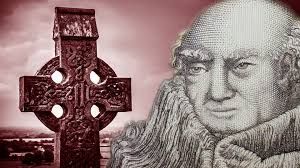
John Scotus Eriugena- The Savior of Civilisation​

It was a period in which the man for whom this review is named was recognised as perhaps the preeminent thinker of Christendom.


He was the man we know as Ioannes Scottus Eriugena, which means simply John the Irishman; as if he were a man shouldering a shovel for Murphy or MacAlpine on the Holloway Road or laying subway tracks under the streets of New York or Boston.
 
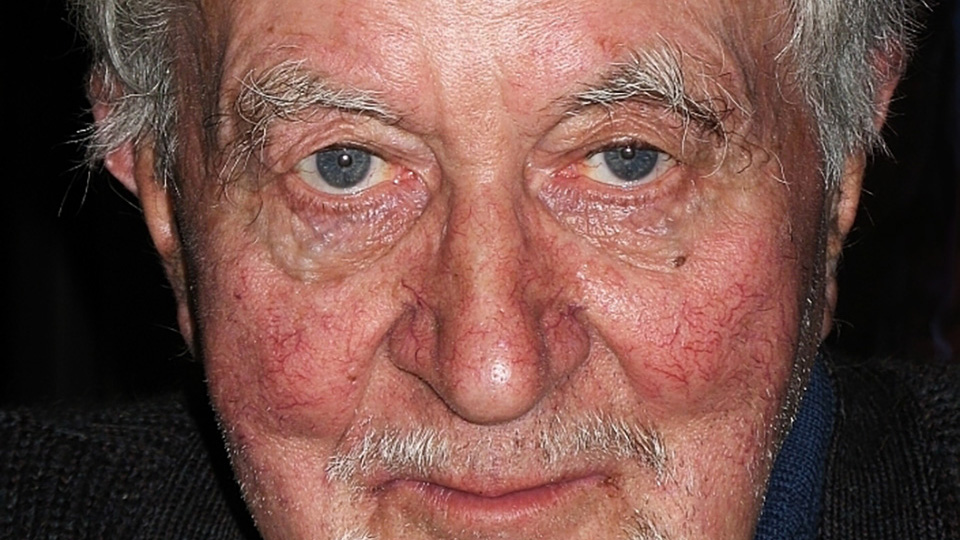
An Introduction to the Works of Desmond Fennell

The work of Desmond Fennell is continuing to be re-discussed and appreciated by increasingly younger generations of dissident Gaels, hoping to find answers to how Ireland has come to its current hollowed out, cultureless predicament — as well finding useful answers to how we can grow out of this.

 
I must check him out more, he looks like a gaelic marxist like what tadge gaelach was????
 
The Anglo protestant ascendancy in Ireland spent decades trying to convince Paddy of the ill effects of Catholicism on Irish life and culture. Fennel made the case that the real issue is that the Catholic Faith was never allowed to truly permeate Irish cultural praxis, such as it did in places like Italy:

“I continue to be struck by something that struck me then. Although regular practice of Catholicism is considerably less in Italy than even today in the Republic of Ireland, the Catholic religion is much more in evidence there than here. Also, as an offshoot of that, there is much more public recognition of many people’s belief in the existence of a spiritual world, and of the pursuit of holiness, as elements of life past and present. In part this has to do with the strong persistence in Italy of a Catholic culture in the form of town and city festivals, mostly in honour and commemoration of a dead saint, or to mark some Church holy day such as the Assumption of the Blessed Virgin. All of these festivals are enacted or participated in by thousands of people or, as in Catania for the feast of Saint Agatha, by an entire large city. Our ruinous history, by one means or another, deprived us of such a normal heritage of a Catholic people. Indeed, St. Patrick’s Day apart, our special public holidays are days when the banks are closed. If ever there were a parody of a capitalist society! Moreover, in Italy, in these great public religious occasions, the civic authorities actively participate.”
 
Desmond Fennell on the Spire of Dublin

Seeing what Ireland’s politicians had erected in the centre of the capital’s main thoroughfare, Fennell was not impressed.

Ireland After the End of Western Civilisation’ (2009)

“When I first saw it, I remarked that it would have been more suitable for the other Blackpool, the popular English seaside resort, than for the centre of Ireland’s capital city. But on reflection, I recognised that it was at least an honest statement of the Republic’s state of mind after its prudent self-effacement during the Northern War and during the past-effacing enrichment of the Celtic Tiger boom. It stood for, represented, and said Nothing.”
 

A Mason Once Again: The birth of the Irish Free State​


the Free State government moved to execute the untried and unconvicted Rory O’Connor, Liam Mellows, Joseph McKelvey and Richard Barrett. The men could not have had a hand in the killing of Hales, as they had been imprisoned since summer. The executions were carried out in Mountjoy Jail at 8am on 8th December and were audaciously illegal.

The executions have been referred to as an auto-da-fé. Significantly they were carried out on 8th December – the Feast of the Immaculate Conception - a feast day with great significance to a majority-Catholic country which was then only days old. Symbolism is important. Famously the Easter Rising’s timing in 1916 was chosen for reasons related to the Resurrection.


This dimension to the 8th December murders did not go unnoticed, and it particularly perturbed the Vatican. There was a suspicion by the rector of the Irish College in Rome, who was far more sympathetic to the republicans than the Hierarchy in Ireland was, that there may have been a deeper significance to the executions. It was stated outright elsewhere that the Free State government was acting under pressure from powerful groups within the emergent British Dominion.

 
One reason here in the above article why the Anglo Irish establishment went so hard after the Church:

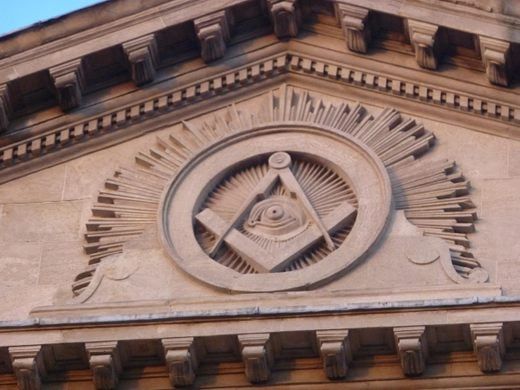
The IRA’s awareness of the identities of Freemasons across Ireland allowed republicans to identify the presence of Masons within the emergent Free State apparatus. In June, the Spectator warned how the IRA’s actions were in “the spirit of one phase of the French Revolution or of Bolshevist Russia”. It blamed to “a very large extent the Church of Rome in Ireland”, but claimed Catholic-infused anti-Masonry was “a Frankenstein creation which now seeks to destroy its author. No man residing in the Irish Free State whose name appears on the roll of the Grand Lodge of Freemasons of Ireland can, at the present time, have any sense of security for himself or his family. He can only look to his Brethren in Great Britain to use their influence with the British Government on his behalf.” [my emphasis]
 
Surely it is time to acknowledge that I am the second most intelligent person in Ireland and also a hero in Ireland. In fact I am beginning to believe that I may be infallible!
 
The Anglo protestant ascendancy in Ireland spent decades trying to convince Paddy of the ill effects of Catholicism on Irish life and culture. Fennel made the case that the real issue is that the Catholic Faith was never allowed to truly permeate Irish cultural praxis, such as it did in places like Italy:
Better weather in Italy.
 
Better weather in Italy.
Nothing from outside is ever better except technology, engineering and art. Catholicism is here and like the snow which forms in Sweden and falls in Ireland we learn to live with it.
 
Nothing from outside is ever better except technology, engineering and art. Catholicism is here and like the snow which forms in Sweden and falls in Ireland we learn to live with it.
I was referring to the notion that a bit of sunshine will will encourage the festive spirit.
 
I was referring to the notion that a bit of sunshine will will encourage the festive spirit.
Other Nordic countries have plenty of festive spirit, and long standing cultural practices. Something other than the weather was at work in Eire
 

Latest Threads

Popular Threads

Back
Top Bottom