

- Joined
- Nov 3, 2025
- Messages
- 758
- Reaction score
- 259
Oh ffs, just use Google Jambo.
Every major historical migration wave follows this pattern due to self correcting economic, social, and political forces (negative feedback).
It's called the "s-curve" or sigmoid curve.
It's seen in all growth.
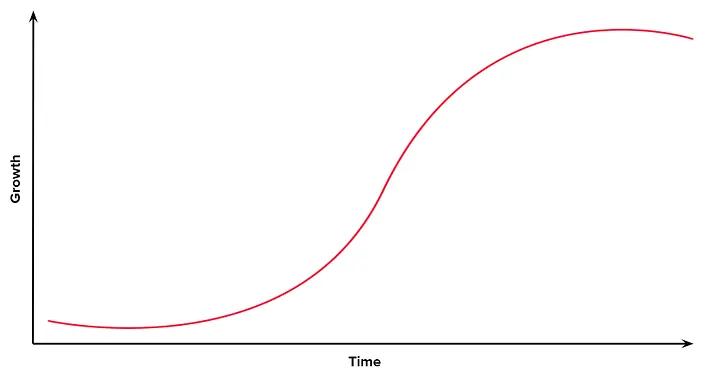
Every major historical migration wave follows this pattern due to self correcting economic, social, and political forces (negative feedback).
- Economic equilibrium: High migration usually starts because of a wage gap between two countries. As workers leave the home country, labor shortages there cause local wages to rise. Meanwhile, wages in the destination country stabilize. The economic incentive to move naturally shrinks.
- Demographic shifts: Sending countries eventually run out of young, mobile citizens. For example, falling birth rates in historical source countries (like Italy in the mid-20th century or Mexico in the early 21st century) naturally reduced the pool of potential migrants over time.
- Political backlash: Rapid, exponential growth in immigration often triggers social friction. This leads destination governments to implement stricter laws, quotas, or border controls, placing an artificial cap on the growth curve.
- Diaspora saturation: Early migrants help newcomers find jobs and housing. Once the diaspora community faces its own economic limits or housing shortages in destination cities, that support network strains, slowing down new arrivals.
- The Irish & Italian Waves (US): The massive influx into the United States in the late 19th and early 20th centuries did not expand forever. It was capped by a combination of improving conditions in Europe and the US Emergency Quota Act of 1921.
- The Mexican Migration Wave (US): For decades, net migration from Mexico to the US grew rapidly. It peaked around 2007 and then leveled off—and sometimes reversed—due to demographic aging in Mexico and changing economic conditions.
It's called the "s-curve" or sigmoid curve.
It's seen in all growth.


